Dear Data began as an experiment between two transatlantic friends who wanted to get to know each other better. They did so by examining, drawing and packaging a different set of personal data each week, which they mailed to each other on a postcard.
Minus the constraints of technology, this form of visualization requires imagination and invites the viewer to linger. Consider it more information art than data visualization:
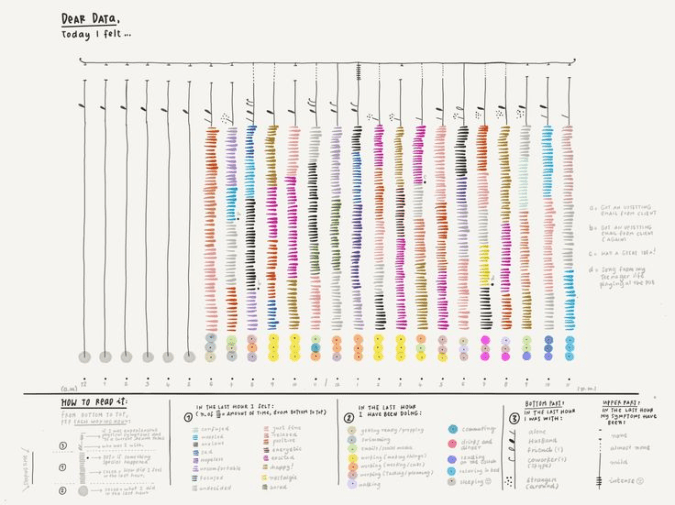
What is similar to data visualization, is the need for the feedback mechanism that allows people to share ‘real’ thoughts. Also essential is reviewing the data to consider what the information is telling you:
- Are there any surprising correlations between groups of information?
- Do you notice some patterns in the responses or written comments?
I found a topic to explore that allows for more white space in design: will meal timing help me lose a few pounds? For eleven days, I captured when and what I ate. The goal was to stick to my current diet within an eight-hour window, while fasting for sixteen.
Below is a hand drawn scatterplot that shows for the most part I’m sticking to the eight-hour food window allowed in intermittent fasting. It also shows that except for dinner where there is food on a plate, I’m very much a grazer, sipping on breakfast smoothies and snacking on nuts when I feel hungry, instead of eating on a set schedule.
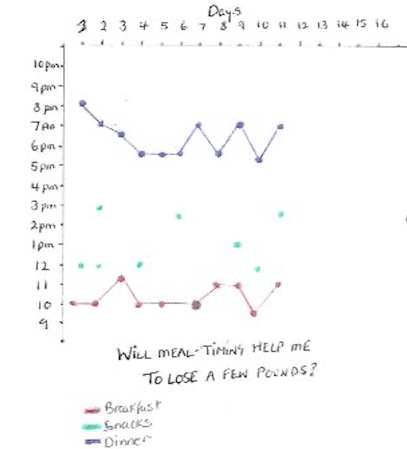
While this may not be the most creative rendition, the scatterplot creates order and shares the information with white space. If I was really dropping this onto a postcard, it would be more decorative with food items written around the circumference of a clock and extra commentary around how it tasted. That’s what we do when telling stories.
In a business scenario where a person may be called in to design a research approach for say rating movie production companies, it would entail more refined decisions. This includes sorting information by movie genre, movie budget, location etc.
Regardless of the initiative or method, visualizations that are clear and factually accurate make for a much more pleasant reading experience. Personal information drawn with care, exceptional detail, and a dash of personality can nurture self awareness and build stronger friendships.
 On A Mission
Responses to blog