Video pre-production planning is this week’s focus. Reading through several chapters of The Bare Bones Camera Course for Film and Video by Tom Schroeppel, we examined what good and bad composition looks like in addition to reviewing popular camera moves as summarized by the New York Film Academy (NYFA).
At this week’s project planning stage, we first completed a creative brief to establish our goals, audience, message and location for a video that will be just a few minutes.
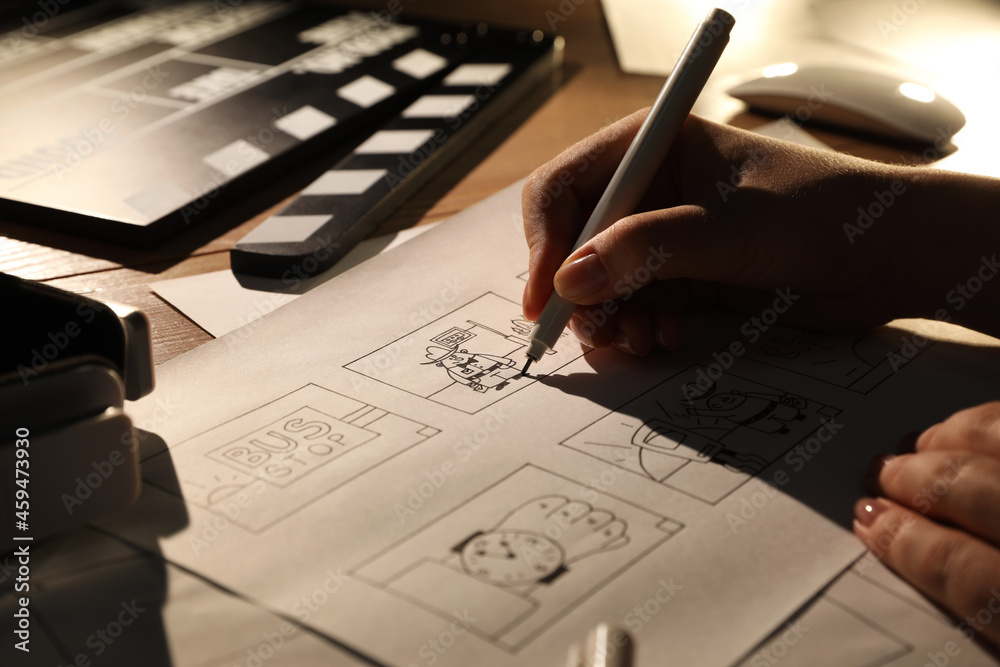
The storyboard is a series of visual ideas that are sequenced to show a two-dimensional paper version of the video before it is filmed. Each visual frame shows the accompanying voiceover and music, or sound effects.
I decided to focus shooting this assignment in a natural setting, with a tour of the park’s highlights:
Camera Composition
The Rule of Thirds helps to improve composition by dividing up a picture frame horizontally and vertically into thirds and then placing the center of interest at one of the four main intersections. The rule of thirds can also be combined with other guidelines like creating balance, head room and depth, while working with bright colors that capture the eye while mitigating distracting backgrounds.
Camera moves include zooming in and out to either focus attention or reveal new information. I’m thinking about how I can incorporate this in a natural setting. Other recommendations like always coupling a camera move with a well composed static shot to bookmark the beginning and end, and not overdoing the camera moves are sound advice.
Movie Clips
Here are a view movie clips I found to highlight some of this week’s concepts:
Despicable Me
I selected this clip for the way it opens with an over-the-shoulder high-angle camera shot of Agnes looking up at a partial unicorn as she demands a stuffed unicorn. The camera tilting down gives a sense of her small frame and it quickly transitions to reveal a wide shot of the fair. (Start at the beginning through the :10 mark.)
Knives Out
Watch the first :10 – :30 of this trailer featuring Jamie Lee Curtis and you see how the camera team establishes an opening shot of the house immediately followed by a rapid series of facial close-ups to reveal all the potential murder suspects. It draws you right in.
In terms of bringing it all together into a video montage next week, we are reminded by Author Tom Schroeppel to create variety by capturing a range of image sizes and angles.
“A camera move should have a purpose. It should in some way contribute to your viewers understanding of what they’re seeing. If it doesn’t, the move distracts and calls attention to itself.”


Responses to blog